What Is a Good ACoS on Amazon? Set It From Your Margin
 David Balan
Co-founder, Horison Marketing4 min read
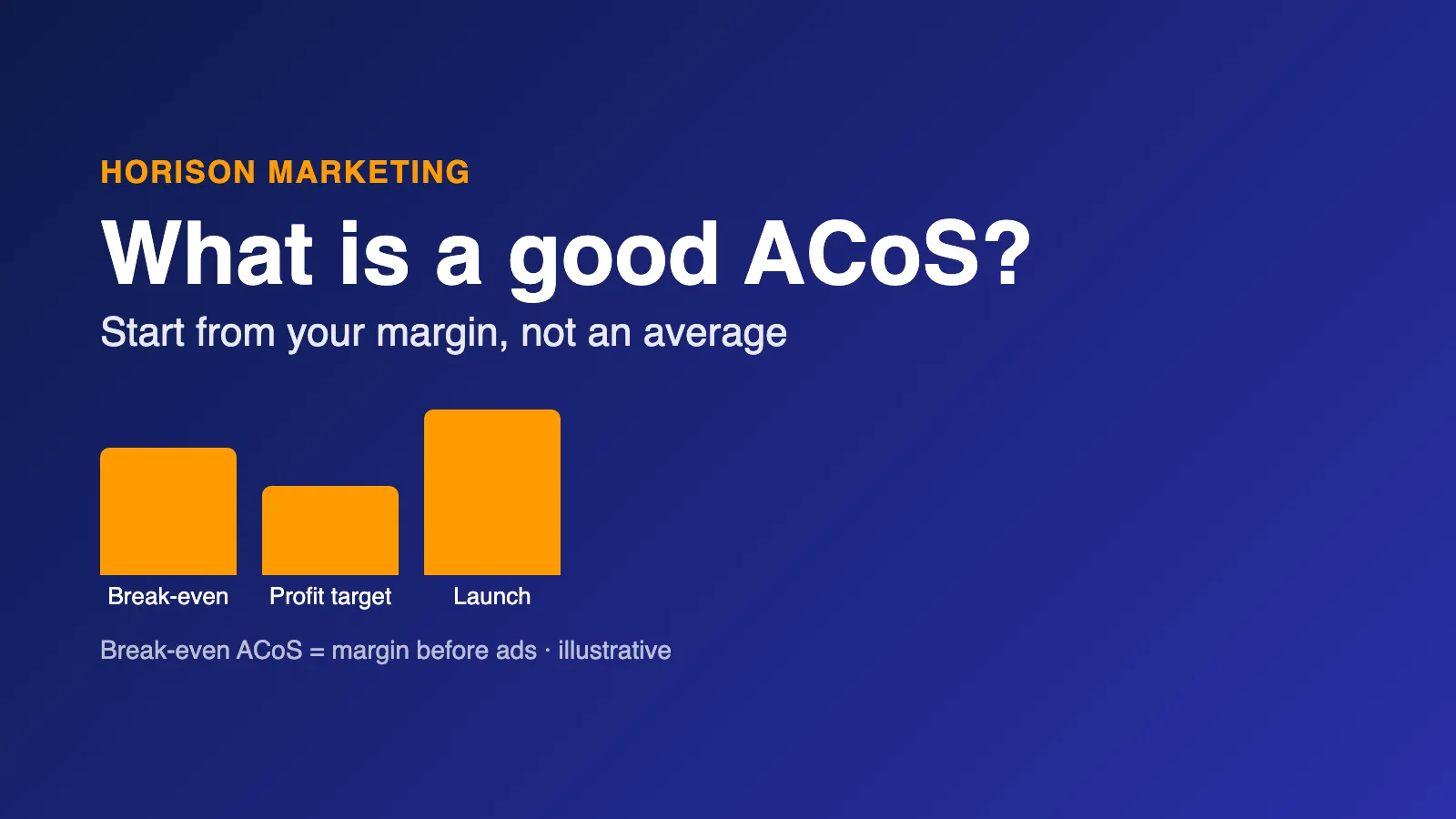
Short answer: a good ACoS is one that stays below your break-even ACoS. Break-even ACoS is your profit margin before advertising. Industry averages tell you what other sellers pay, not what you can afford.
How do you work out break-even ACoS?
Break-even ACoS = (selling price − product cost − fulfilment − Amazon fees) ÷ selling price × 100
Amazon defines ACoS as ad spend divided by ad-attributed sales (Amazon Ads ACoS guide). Break-even is the same ratio at the point where the ad sale pays for the ad and nothing more.
Worked example (illustrative numbers): a product sells for £25 excluding VAT. Product cost is £7, FBA fulfilment £4.50 and the referral fee 15%, or £3.75. That leaves £9.75, a 39% margin before ads. Your break-even ACoS is 39%.
| ACoS | Ad cost per £25 sale | Left after ads | Result |
|---|---|---|---|
| 25% | £6.25 | £3.50 (14%) | Profit |
| 39% | £9.75 | £0 | Break-even |
| 45% | £11.25 | −£1.50 (−6%) | Loss |
You can run your own numbers in the break-even ACoS calculator.
Why averages mislead
Two sellers can both run a 30% ACoS. One has a 45% margin and earns on every ad sale; the other has a 25% margin and loses. The number alone says nothing. The same is true for the percentages quoted in articles: they describe other people’s margins. A target built from your own cost base is the only one you can defend to a finance director or to an agency.
What ACoS should you aim for at each stage?
| Stage | Target ACoS | Why |
|---|---|---|
| Launch (first weeks) | Above break-even, by plan | Ads buy sales velocity, rank and reviews. Fix a budget and an end date. |
| Growth | At or just under break-even | Reinvest while organic sales rise. |
| Mature, profit mode | Well under break-even | Ads defend rank; the product should carry itself. |
| Defending your brand terms | Low | Branded searches convert well; high ACoS here is a warning sign. |
Judge launches by total sales and TACoS, not ACoS alone. TACoS divides ad spend by all sales, so it shows whether ads are lifting organic sales.
Five checks before you act on an ACoS number
- Is it the right period? Ad sales attribute over a window after the click, so very recent days look worse than they will end up.
- Is it one campaign or one search term? An account average hides profitable terms and loss-makers. Read the search term report term by term.
- Is it a launch product? Compare it with the plan, not with break-even.
- Is the listing the problem? A high ACoS with plenty of clicks and few orders often points to price, images or reviews, not bids.
- Is the margin up to date? Fees and costs change. Recalculate break-even when they do.
How to bring ACoS down without losing sales
- Stop paying for clicks that never convert. In a sample report we built for a fictional water bottle brand, 9 of 15 search terms had 10 or more clicks and no orders. They took £88.51 of £155.09 spend (57%). Removing them would cut ACoS from 14.7% to 6.3% on the same sales. Real accounts differ: the point is that the leak is findable in minutes. Try it with your own file in the free search term report analyser.
- Bid by target. Lower bids where a target runs above break-even and raise them where it converts below it.
- Fix conversion. Better images, price and reviews lower ACoS without touching bids. See our Amazon PPC strategy guide.
When to ask for help
If your ACoS is above break-even and you cannot see why, an outside review of the account usually finds the cause quickly. Our Amazon PPC management team does this on a free discovery call: you bring the account, we tell you where the money goes. Use the PPC audit scorecard first to see where you stand.
About the author: David Balan is co-founder of Horison Marketing, a UK Amazon agency that manages Amazon advertising for brands in the UK, EU and US. Worked examples use illustrative figures, not client data.
Frequently Asked Questions
What is a good ACoS on Amazon?
One below your break-even ACoS. Break-even ACoS equals your margin before advertising: price minus product cost, fulfilment and Amazon fees, divided by price. If that margin is 39%, an ACoS of 25% leaves 14% of the ad sale as profit and an ACoS of 45% loses money. There is no single good number that fits every seller.
Is a 30% ACoS good?
It depends on margin. At a 39% break-even it is profitable, with 9% of each ad sale left over. At a 25% break-even it loses money on every ad sale. Work out your break-even first, then judge 30% against it.
What is the difference between ACoS and break-even ACoS?
ACoS is what your ads actually cost as a share of the sales they bring in. Break-even ACoS is the highest ACoS you can afford before an ad sale loses money. A campaign is profitable when ACoS is below break-even.
Should my ACoS be lower during a product launch?
No, usually higher. A new product needs sales to build rank and reviews, so planned ACoS above break-even for a fixed period can be sensible. Set the end date and the organic rank or sales you expect in return before you start, and judge the launch on total sales and TACoS as well as ACoS.
How do I lower my ACoS?
Cut spend on search terms that get clicks without orders, lower bids on targets that run above break-even, and improve conversion through the listing (main image, price, reviews). Lowering ACoS by cutting every bid usually also cuts sales, so change one thing at a time and check total sales.
Is a low ACoS always better?
No. A very low ACoS can mean you are bidding too little to win sales you could profitably make. Compare ACoS with break-even and with TACoS: if ACoS is far below break-even and sales are flat, there may be room to raise bids on the best terms.
What ACoS should I use on Amazon UK?
Use the same method: break-even ACoS from your own margin. On Amazon.co.uk prices include VAT, so take VAT out of the selling price before working out margin, otherwise break-even looks higher than it is.

David Balan is co-founder of Horison Marketing, a full-service Amazon agency that has managed over $1B in lifetime Amazon revenue for brands in the UK, EU and US.